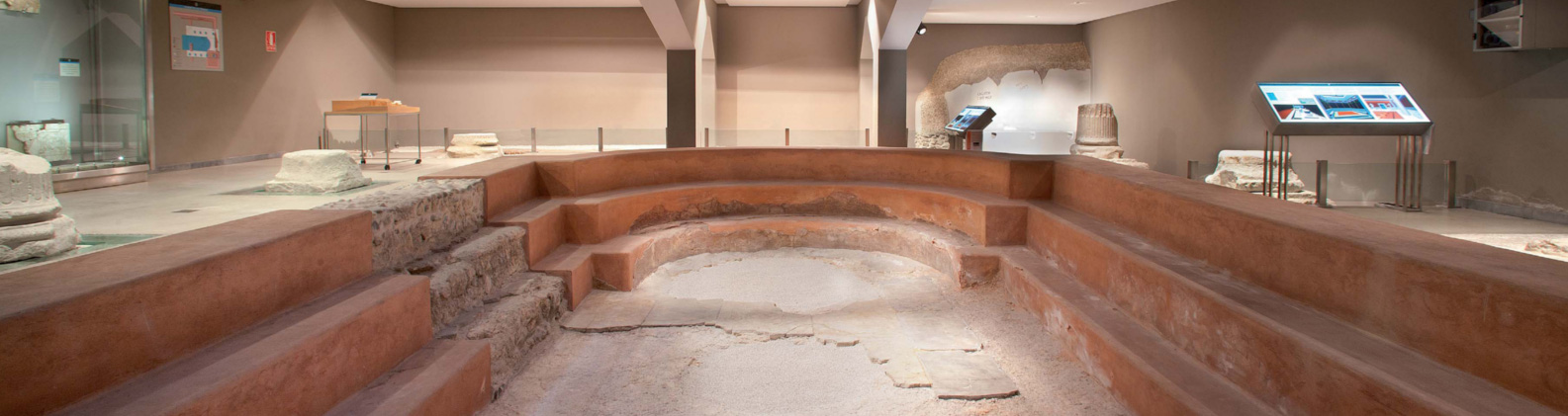



From the 1st century B.C. to the beginning of the 4th century A.C. there were public baths in he centre of the city of Caesarugusta, between the forum and the theatre.
Although the installations originally comprised several different areas: changing rooms, hot, warm and cold rooms, a gymnasium etc. basically the only part that has been preserved is the remains of the latrines (in use until the end of the 1st century B.C.) which were later demolished to build a large, open-air, swimming pool with a portico.
For most Romans the public baths were more than just a place for carrying out their personal hygiene, they also played an important function as a social and cultural centre. In addition to bathing, at the same installations they could practice different sports, read, walk and listen to music or poetry. The ritual of a Roman bath always alternated hot and cold water and although there was no set order, they normally started off with a hot bath and ended up with a refreshing cold bath. Men and women bathed separately either in different zones or at different times of the day.
Within the system that governed the political and institutional life of the colony of Caesarugusta one of the many functions of the person who occupied the post of aedile was to supervise the administration, maintenance and upkeep of the public baths owned by the city, ensuring that they were well supplied with running water and wodd.