
Museos y Exposiciones

Altavoz

Evening Show: "The theatre of Caesaraugusta. 20 centuries of history"


Practical information:

Audiovisal

  • Show only in summer: Weekends from July to October. There are several open-air, evening showings at the theatre monument on Friday and Saturday nights and the eves of bank holidays.
  • From 1 July to 30 September, Friday and Saturday at 22 h
  • Duration: approximately 20 minutes.
  • Minimum number of persons for each showing: 15. Maximum seating capacity: 125.
  • Price: 1 euro
  • Film showings depend on good weather conditions.

Reservation:

Description:

Audiovisual

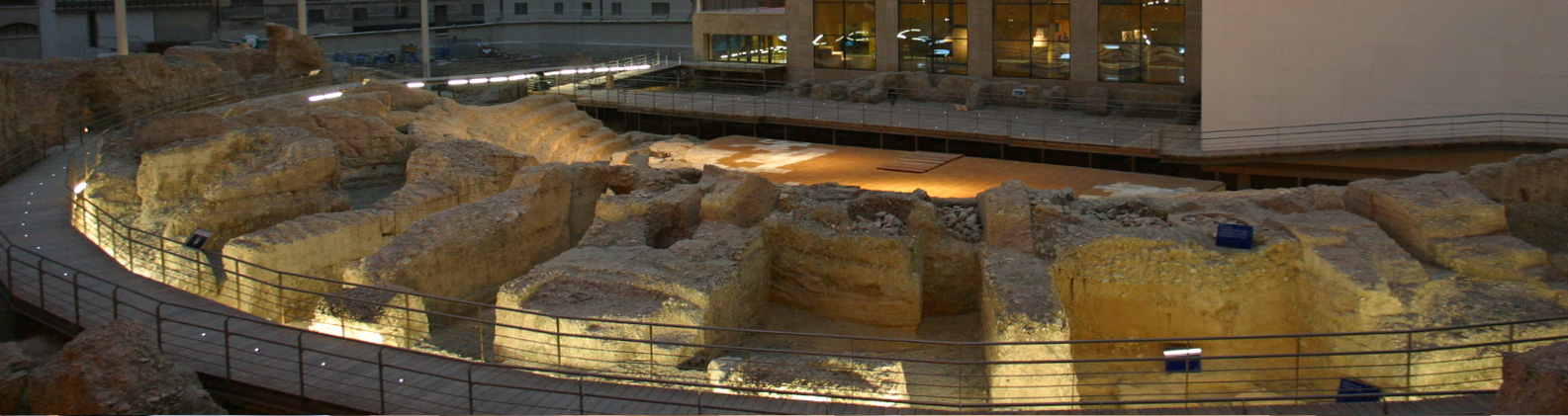
«An age builds up cities; an hour destroys them». This reflection on the flux of life by the genial Seneca offers us a vehicle to travel back to the times in which, on these very foundations, there once stood one of the largest theatres of Roman Hispania.

Throughout the video we are accompanied by music set in Ancient Rome, composed from texts of the time and instruments and musical formations shown in paintings, sculptures and ceramics.

After several opening images of its construction, there is a careful and exact reconstruction of the theatre of Caesaraugusta based on data obtained in the most up to date specialised studies.

Just as the spectators in ancient times, through their eyes we discover the presence of musicians, dancers, comedians and jugglers, scenes from comedies and satirical dramas, resulting in an aesthetic and spatial composition, with the mask - surely the most obvious symbol of the universe of the theatre - taking the lead role.


Audiovisual

Dionysus the God of wine was worshipped with choral songs and processions in which masked characters appeared. The origin of theatre performances goes back to these processions of devotion; even key items of the actors´ clothing are Dionysian. To illustrate the life of this god, several scenes from murals found in the Villa of the Mysteries of Pompey have been selected, bringing together, in one narration, the story of the deification of Dionysus and his mother Semele, and that of a priestess taking part in the Dionysian mysteries.

After recalling, once again, the words of Seneca, the film ends with an idealised image of the building, inviting us wander through it, immersing ourselves in the atmosphere of the theatre of Caesaraugusta at the height of its splendour.

Sponsors:

Sponsors